


(July 16, 2020 10:44AM) The Jackson County Health Department is alerting Jackson County residents and healthcare providers to an increasing number of confirmed Lyme disease cases being reported in Jackson County. Over the last five years, Jackson County has averaged two cases of Lyme disease for the entire year. At this point in the year, Jackson County is halfway through tick season and there are five reported cases. The health department says this increase is an indication of a rise in tick activity in our area. The rising incidence of Lyme disease is due to a number of factors including:
● Increased tick abundance
● Overabundant deer population
● Increased recognition of the disease
● Establishment of more residences in wooded areas
● Increased potential for contact with ticks
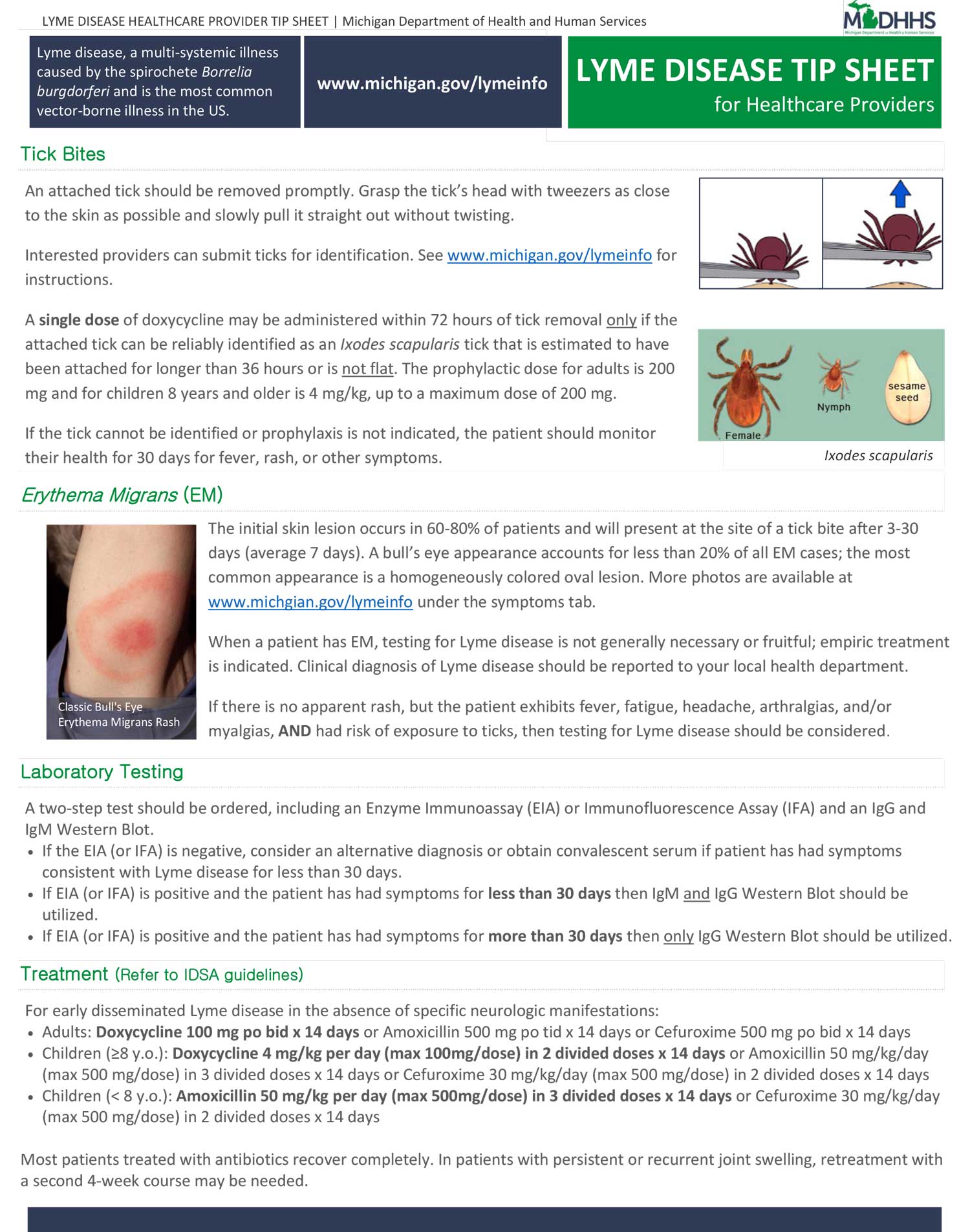
Lyme disease is caused by the bacterium Borrelia burgdorferi and is transmitted by the blacklegged (deer) tick. It is the most common vector-borne disease in the United States and has been progressively spreading across the state of Michigan. Typical signs of Lyme disease include flu-like symptoms but if left untreated may spread to joints, the heart, and/or the nervous system. The majority of cases can be treated successfully with antibiotics. Finding and removing ticks promptly (within 24 hours) can prevent Lyme disease.
The department is advising health care providers to become familiar with the clinical manifestations and recommended practices for diagnosing and treating Lyme disease, https://www.michigan.gov/emergingdiseases/0,4579,7-186-76711_71379—,00.html. Persons who have removed attached ticks from themselves (including those who have received antibiotic prophylaxis) should be monitored closely for signs and symptoms of tick-borne diseases for up to 30 days; in particular, they should be monitored for the development of an expanding skin lesion at the site of the tick bite that may suggest Lyme disease.
Tick exposure can occur year-round, but ticks are most active during warmer months (April-September). With the steady increase in the incidence and geographic spread of Lyme disease, the Jackson County Health Department asks residents to take steps to protect themselves from tick bites.
The Jackson County Health Department is again conducting field surveillance for ticks that cause disease in humans, including Lyme Disease. Environmental Health Division staff conduct what is called a Tick Drag along trails and other potential tick habitats in an attempt to capture ticks. Any captured ticks are then collected and identified. Black Legged ticks are the target species, but all ticks are of entomological interest. Tick surveillance is in combination with mosquito surveillance that the JCHD is also conducting all summer long as part of an ongoing Michigan Department of Health and Human Services Zika and Lyme Disease grant. With the latest Communicable Disease incidence data in hand, the frequency of tick drags by JCHD is increasing both in number and geographically. Though Division staff have not captured any black-legged ticks to date, anecdotal evidence does indicate that the tick populations in Jackson County have been increasing over the past several years. If you hike into brushy and wooded areas, assume you will be in active tick habitat and take appropriate actions as described in this advisory.
Before You Go Outdoors:
- Know where to expect ticks. Ticks live in grassy, brushy, or wooded areas, or even on animals.
- Treat clothing and gear with products containing 0.5% permethrin or you can buy permethrin-treated clothing and gear. Always follow product instructions. EPA’s helpful search tool external icon can help you find the product that best suits your needs.
- Avoid Contact with Ticks. Avoid wooded and brushy areas with high grass and walk in the center of trails.
After You Come Indoors:
• Check your clothing for ticks. Any ticks that are found should be removed. Tumble dry clothes in a dryer on high heat for 10 minutes to kill ticks on dry clothing after you come indoors.
• Examine gear and pets. Ticks can ride into the home on clothing and pets, so carefully examine pets, coats, and daypacks.
• Check your body for ticks after being outdoors. Showering within two hours of coming indoors may help wash off unattached ticks and it is a good opportunity to do a tick check.
- Check these areas of your body and your child’s body after being outdoors. Under the arms, in and around the hair and ears, inside the belly button, the waist and back, back of the knees and between the legs and pelvic area.
For additional information about Lyme Disease, visit the Centers for Disease Control website at https://www.cdc.gov/lyme, or information regarding tick identification and testing, visit www.michigan.gov/emergingdiseases.
If you have questions regarding ticks or Lyme disease, please contact the Jackson County Health Department Communicable Disease office at 517-768-1664.




Week 7 HS Football Scores

Football Union City vs Springport, 10-9-26 | Photo Gallery

Big Brothers Big Sisters Game Day Gala, 10-9-26 | Photo Gallery

Football Grass Lake vs Michigan Center 10-9-2026 | Photo Gallery


Football Leslie vs Hanover Horton, 10-9-26 | Photo Gallery




 61°F
61°F